
Weighing as the foundation of real yield
Field yield is not defined only by total harvest volume, but by the relationship between area, kilograms obtained, and variability within the field.
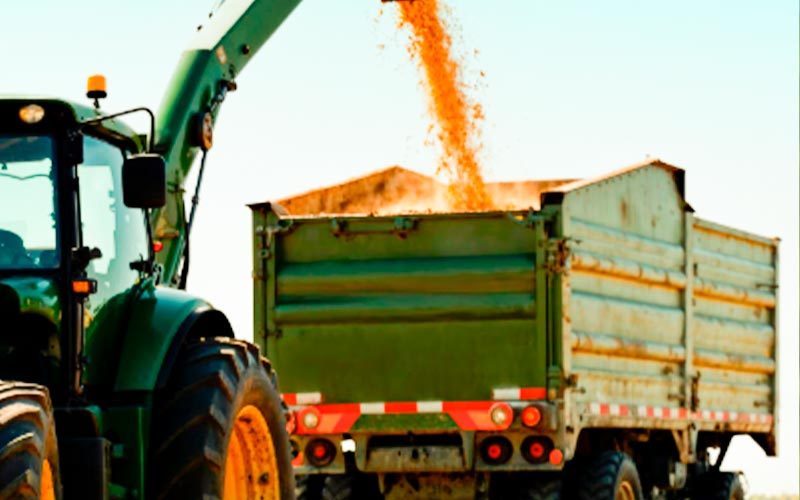
A reliable weighing system on the grain cart makes it possible to know exactly how much each field and each zone produces.
Without accurate data, agronomic decisions are based on assumptions rather than verifiable information.
Problems caused by inaccurate weighing in grain carts
Incorrect weighing can hide yield losses that go unnoticed season after season.
Some of the most common problems are:
- Differences between estimated and actual yield that affect future planning.
- Inability to reliably compare results between fields or seasons.
- Errors in evaluating hybrids, seeds, or agronomic practices.
Direct impact on agronomic decision-making
When weighing is accurate, producers can identify which fields are more efficient and which require adjustments.
Reliable weight information makes it possible to optimize fertilization, crop rotation, and input usage.
The grain cart stops being just a transport unit and becomes a strategic measurement tool.
The importance of a robust weighing system
Scales for grain carts must be resistant, stable, and designed to operate under demanding field conditions.
Proper calibration and measurement repeatability are essential to ensure consistent data over time.
An adequate weighing system makes it possible to integrate weight data with digital records and further analysis.
Measure accurately to produce better
Accurately weighing a grain cart is not a technical detail, but a decision that directly impacts agricultural profitability.
When weight data is reliable, field yield becomes a controllable variable and precision agriculture fulfills its true purpose.

 Llamar
 Mapa
Mapa
 Email
Email